

Teaching about racism: Connecting colonial histories and contemporary inequalities in the classroom
September 23 at 3:00 PM - 4:00 PM CEST
| FreeThis NECE Campus session explored how educators can teach racism as a historical and structural phenomenon. The discussion centred on What is Racism?, a new digital learning module developed by the House of European History as part of its free HistoriCall platform.
The session was led by Mackda Ghebremariam Tesfau, Learning and Engagement Officer at the House of European History. She presented the research, educational approach and practical tools behind the module, which was developed in response to requests from teachers across Europe for age-appropriate resources on racism and support in facilitating sensitive classroom discussions.
The project began with extensive consultation. More than 1,000 teachers from the European Union and the United Kingdom participated in an initial evaluation, followed by interviews and focus groups with around 40 educators. The research identified a lack of suitable teaching materials and a need for guidance in addressing difficult conversations about racism, colonialism and inequality in the classroom.
A central idea behind the module is that racism should be understood not only as personal prejudice but also as a system rooted in history, institutions and power. Our speaker explained that public discussions often focus on individual attitudes while overlooking the historical and sociological foundations of racism. The module therefore traces connections between colonialism, racial hierarchies and contemporary forms of structural inequality.
The learning experience begins with the question “What is racism?” and returns to the same question at the end, allowing students and teachers to reflect on how their understanding has evolved. An introductory video frames racism as a system that emerged alongside European colonial expansion and became embedded in laws, institutions, education and public life. The video presents race as a social construct rather than a biological reality and encourages students to examine how historical systems of power continue to shape societies today.
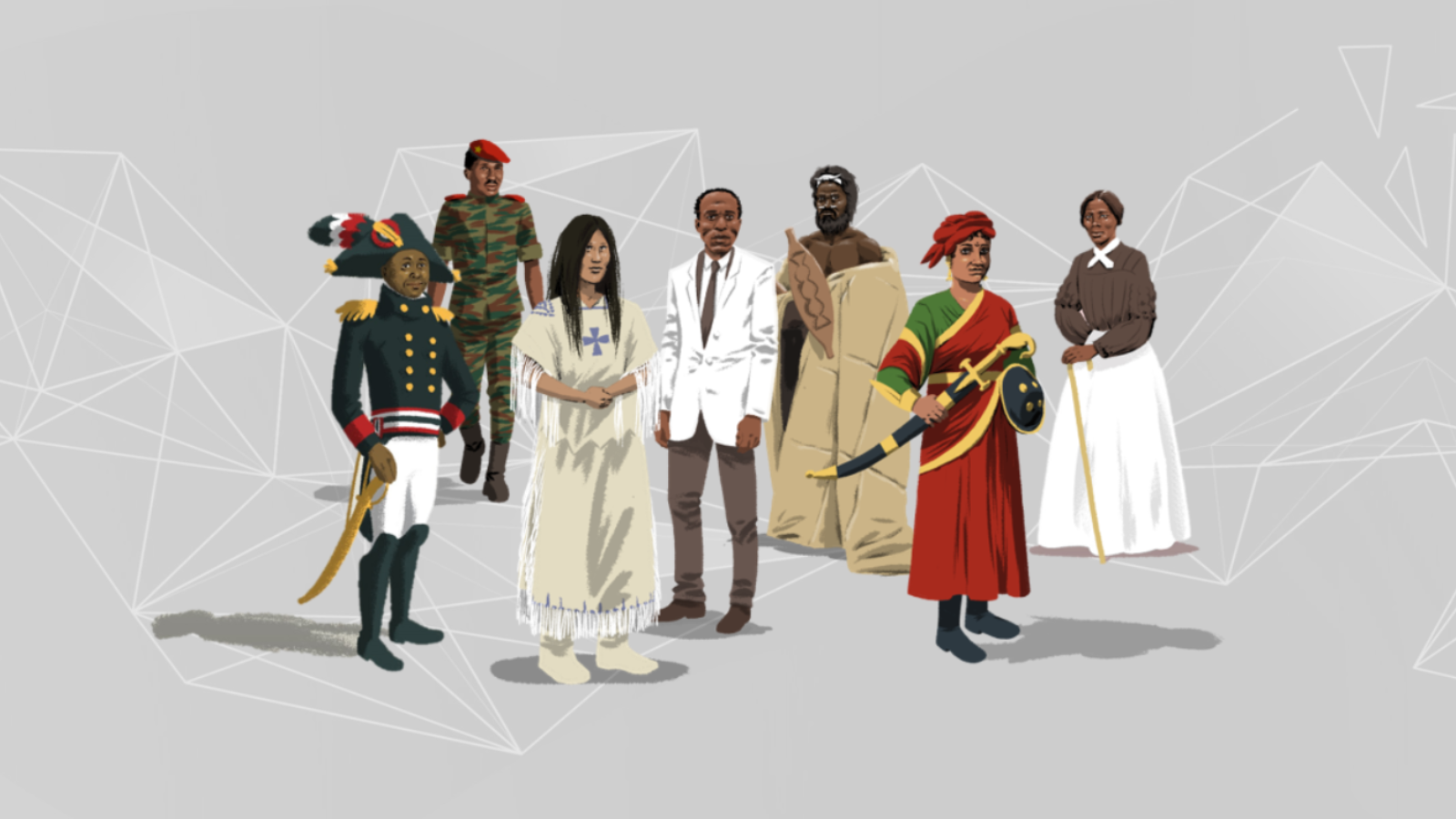
One of the module’s most distinctive features is its branching structure. Rather than following a single linear narrative, students choose one of seven historical figures to guide their learning journey. These include thinkers, activists, political leaders and anti-colonial resistance figures from different regions and historical periods. The approach was designed to make more than six centuries of colonial history feel relevant and accessible while highlighting diverse perspectives and experiences.
The module also uses object-based learning and museum education techniques. One activity invites students to analyse historical images from multiple perspectives, including those represented in the image, those omitted from it and their own viewpoint as observers. Through these exercises, students are encouraged to examine how historical narratives are constructed, whose experiences are remembered and whose are marginalised.
Another important element is the connection between historical and contemporary forms of racism. Expert interviews explore topics such as the links between slavery and anti-Black racism, as well as the relationship between anti-Roma racism and broader structures of exclusion and inequality. These interviews help students connect historical developments to present-day social realities.
The module further encourages active engagement through classroom exercises and interview projects. Students can conduct their own interviews with historical figures, contemporary role models or members of their communities, helping them explore questions of memory, identity and social justice beyond the classroom.
To support educators, the platform includes a comprehensive teacher manual with additional resources, methodological guidance and recommendations for facilitating sensitive discussions. Particular attention is given to the concept of moving from a “safe space” to a “brave space”, where students can engage thoughtfully with challenging topics while remaining respectful of different experiences and perspectives.
Throughout the session, our speaker emphasised that the module seeks not only to explain racism but also to provide students with tools for critical thinking. By examining colonial histories, resistance movements and contemporary inequalities together, the learning materials encourage learners to question assumptions, understand the historical roots of social structures and reflect on their own role in promoting human rights and equality.
Speaker
Mackda Ghebremariam Tesfau is a researcher and educator working on race, anti-racism, colonial legacies, and educational inequality in Europe. She is Learning and Engagement Officer at the House of European History, working on the public and educational programme connected to the temporary exhibition Postcolonial?, the development of the HistoriCall module What is Racism?. Her work combines sociological research and anti-racist pedagogy, with a focus on how colonial histories and racial inequalities can be addressed in accessible and meaningful ways in educational settings.
She has published on race, racism, anti-racism, migration, and educational inequality in Italy and Europe, and has experience in qualitative research, teacher-oriented resources, and participatory educational formats.