

Trust and civic education
NECE Festival: TRUST | October 15, 2026
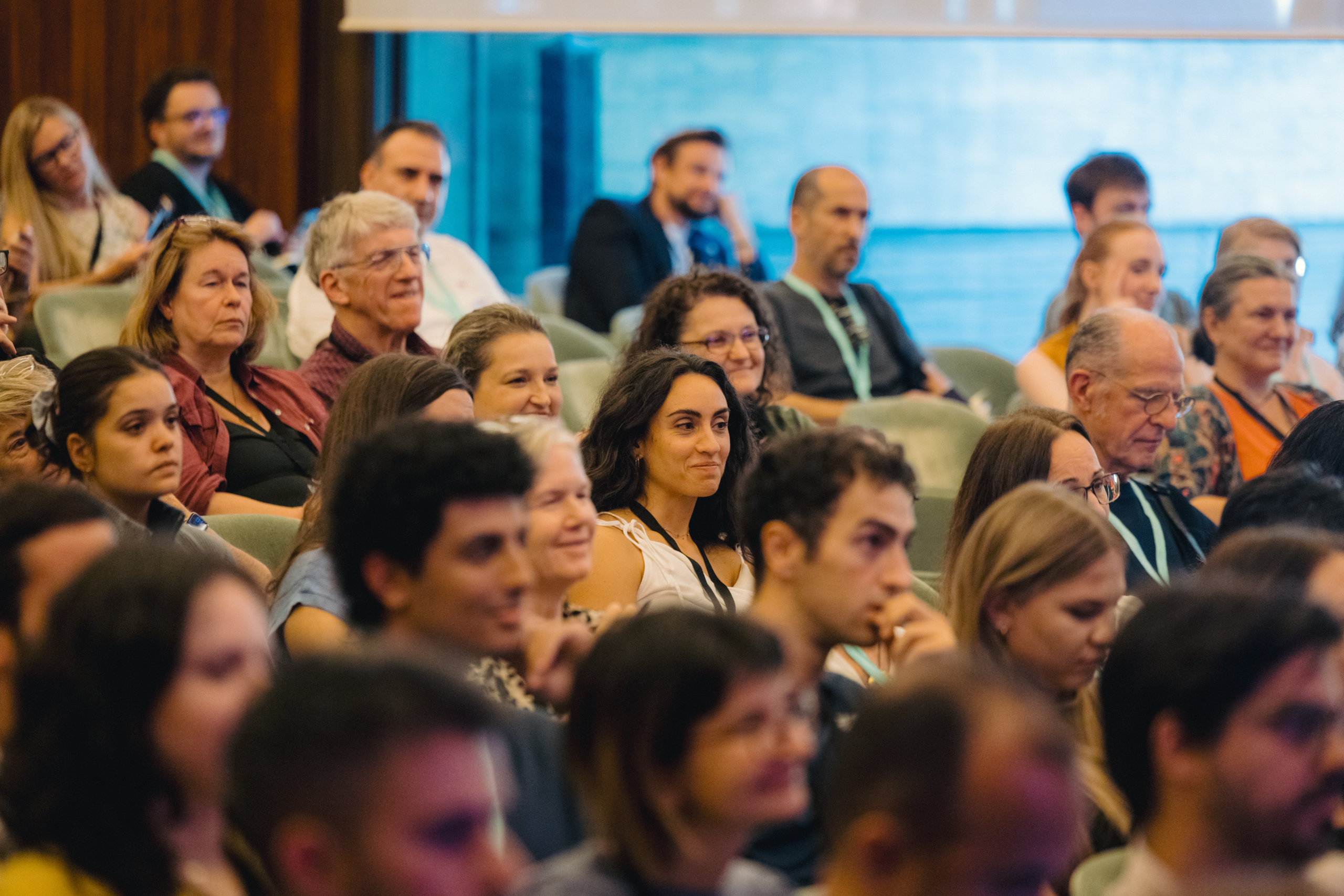
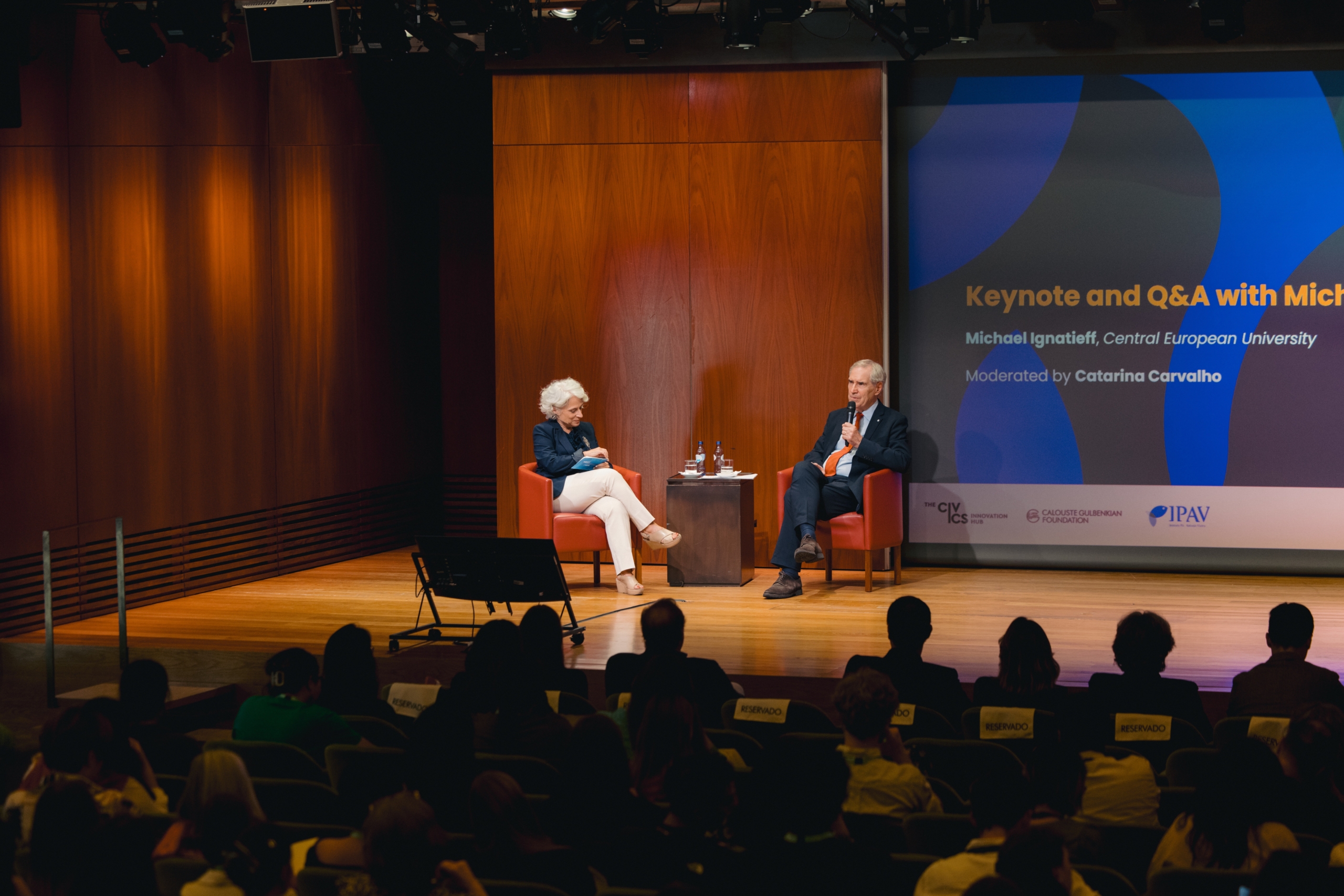
Keynote speech by Michael Ignatieff
“Citizens in a democracy should be mistrustful.” In his keynote at the NECE Festival 2026: TRUST in Lisbon, political thinker, author and former politician Michael Ignatieff made the case that distrust is not necessarily a democratic weakness – it is one of the ways citizens hold power to account. Trust in institutions, he argued, must be earned through actions, not cultivated through civic education. The task of civic educators lies elsewhere: teaching people to challenge authority, engage with opposing views and preserve human relationships despite profound disagreements. Read the full keynote below.
***
This conference’s theme is trust. We are meeting to reflect together about how to use education to strengthen trust in democracy at a time when confidence in democratic institutions is challenged by polarization at home and international disintegration abroad.
It is a cliche of our time that trust is fraying – between individuals, generations, citizens and their institutions. Before we surrender to fashionable narratives of gloom, however, we ought to look more carefully at the word itself.
What does trust mean? How is trust betrayed? How can it be regained?
Trust begins in the family. We all know what trust looks like – the infant’s upward gaze at its breast-feeding mother, the natural way a child reaches up, without thinking, to take his father’s hand. Trust is a form of love and a form of faith, the belief, without questioning, that the loved person will always be there to protect you. As a form of faith, trust expresses a confidence in the continuity through time of the axial relationships of life. As such trust has a relationship to truth and truthfulness, a confidence that once a person you love tells you that they will never let you down, you believe them.
Trust broken or betrayed in childhood is hard to regain. Those whose faith in those they love has been shattered may find it impossible to extend any kind of trust to strangers later in life. Those who have lost trust in others are condemned to live in a kind of psychic cage, dependent on themselves alone for protection and security.
We confront here a limit to the healing capacities of civic education. Damaged persons can be taught to trust again only if they can dare to love again. And who among us is confident that we can teach strangers how to love?
If trust is gained – or lost – in childhood, when we reach adulthood and our circle widens beyond the family to embrace the social realm, trust naturally takes tribal form. As in the family, so in our relations with strangers, we trust those who most resemble us, who share our race, color of skin, ethnicity, language, gender, and religion. Tribal means an instinctive, natural identification with those who resemble us.
With the disintegration of the European land empires and the rise of mass migration, North American and European democracies have embarked on an unprecedented attempt to replace tribal with civic identification, to replace majority rule based on dominant ethnicity, race and religion, with a multicultural polity held together by equal rights and common civic belonging.
The multicultural transformation of our societies has in turn redefined the challenges facing civic education. The post Holocaust program of civic education inaugurated in Germany after the war sought to train citizens of Germany to bear the burden of responsibility for what had been done in their name between 1933 and 1945. Increasingly, after 1960, the focus of civic education has moved onto the question of how to build trust beyond tribe, how to create common civic identification—‘constitutional patriotism’ was Habermas’ famous phrase – among strangers with divergent origin stories.
Teaching strangers to replace tribal identifications with civic ones does not mean demanding that they renounce pride in origins, traditions, languages and religion. The identifications required to make multicultural democracy work are thus complex and layered. We simultaneously see ourselves as equal citizens and as members of tribes, and we see others in the same way. Trust is fostered best in the mutual recognition of civic equality, but it also depends on recognition and respect for difference.
The second point is that one size does not fit all in civic education. Liberal democracy takes on the colors, traditions, myths and loyalties of the societies in which it takes root. The civic education appropriate for Germany is not the same as that required in France. Education has to follow the grain of the national wood. Countries that see themselves as nations of immigration think of the democratic process in terms of constant incorporation of newcomers, while countries that think of themselves as communities of common origin think differently about who belongs and who doesn’t.
I’m a citizen of a country built on immigration. My father was a Russian emigrant, my mother a native born Canadian. Civic education in our country began for my father in 1935 with a citizenship ceremony in a courthouse, in which he pledged allegiance to the British crown, a historical detail which points out, incidentally, that all civic education is historical. In that ritual moment from the past, a stranger and a refugee became a citizen. In America, the national creed – E Pluribus Unum – has turned civic education into the national project: enlisting strangers into the institutions of American democracy and signing them up for the American dream.
It once was the case that European societies were more reluctant than North America to embrace a multicultural national identity. Nowadays, with nativist American nationalism on the ascendant, ICE repatriations of immigrant populations underway, and the southern border with Mexico all but closed, American and European attitudes towards the civic incorporation of strangers begin to look the same. On both continents, immigration control dominates the political agenda, pulling the center of gravity of politics to the right.
This rightward turn is transforming the very purpose of civic education. It is no longer about turning strangers into citizens, but persuading citizens to accept strangers. It is no longer about how to belong to a democratic society, but who should belong.
On both the North American and European continents, national identities and democratic stability are now protected by high walls and fences, border patrols, dogs and patrol boats. In a few cases, high walls include a door for legal migration, necessary for societies that uniformly face declining demographics. So, for all the nativist turn in European and North American politics, our societies continue to need migration, and we continue to be multicultural democracies, faced with the problem, central to civic education, of how to strengthen trust among citizens who no longer share the same origins, religions, race or faith.
How exactly, and where exactly, do we educate citizens in the complex work of democratic trust? Foundations, parties, civil society organizations, volunteer groups and schools all have a key role to play, and they do their work best when they are subjected to as little central coordination as possible. A plural society needs pluralist voices if civic education is to flourish. All of our institutions have a role to play. Political parties are instruments of political socialization, and they shape civic allegiance in competition with each other. When they recruit support, their impact on democracy is ambiguous. They both integrate immigrant groups into the political system and at the same time polarize the electorate into tribal groupings.
Another key institution in civic education is the state school system. It bears the responsibility for acculturating the children of immigrants into civic life. Our schools are trying to teach children to look beyond their differences and share respect for each other as rights bearing equals.
This ongoing struggle to teach multicultural tolerance as the ground value of democracy is recurrently challenged by political and religious fanaticism, bursting out in fundamentalist attacks on other faiths or on democratic institutions or officers of the law. These attacks continue to plague our societies, but so far the center has held steady, because these attacks awaken horror from the very communities in whose name they are committed. Attacks on synagogues, no less than attacks on mosques may be intended to divide, but in reality, they create alliances among people who share the same conviction that such hatred is a danger to us all.
Looking beyond difference, establishing a common ground of trust among strangers is the fundamental work of civic education, but its objectives are in tension with each other. We want citizens to respect their tribal differences, while seeing beyond these differences to the shared civic identity of citizenship.
We are, I would argue, trying to reach that utopia expressed by Martin Luther King when he said he looked forward to a day when a man was judged, not by the color of his skin, but by the content of his character. This is a beautiful thought, but who truly does look beyond race when we encounter strangers for the first time? Seeing beyond difference commits us to the unfashionable idea that beneath difference, there are only individuals.
Individualism, I would argue, is the reality that saves us from the perils of tribalism. My mother used to say that her idea of utopia was a place where all dislike was purely personal. You didn’t dislike people because of their race, gender, religion or national identity. You disliked them because they were such awful people. My mother’s utopia helps us, I think, to clarify what civic education is all about. It is not about enforcing politically correct toleration but recognizing the stubborn singularity of our fellow citizens. Never easy work, but it is the key to respect, and the crucial avenue leading to trust. We do not want citizens to trust each other only because they share the same race, religion, class or gender, but because, as individuals, we respect each other’s rights. To treat each other as equals means respecting the sovereignty of each individual and our freedom to make civic choices. It means refusing to presume we can read other people’s political preferences off their collective characteristics. Instead, we grant them the presumption that they, like us, make up their own minds. Mind you, granting strangers that presumption also assumes that we acknowledge that our own judgment is a very imperfect instrument. We know, only too well, how often we are wrong about politics and about life. The presumption that citizens’ sovereignty of judgement is to be respected, doesn’t require us to believe that our fellow citizens are always right. They may be wrong about the facts – but, right or wrong about the facts, they are entitled to their feelings. Having been a democratic politician myself, I can tell you, it is a mistake in politics to quarrel with people’s feelings. People feel what they feel, and in politics, those feelings are the groove within which argument has to flow. From the politicians’ side of the democratic bargain, trusting your citizens means trusting their feelings and accepting, sometimes through gritted teeth, their judgements.
So these are some of the foundation principles of civic education in multicultural societies: teaching respect for difference, but seeing beyond difference to the sovereign individual and our capacity for rational choice; respecting the individual but also emphasizing the civic ties that define our responsibilities and tie us together in the life-long practice of being a good citizen.
What exactly makes a good citizen? What exactly is the kind of trust that civic education would want to instill in the good citizen? In a healthy democracy, citizens are skeptics, actively holding representatives to account, questioning them about the gaps that inevitably emerge between promise and the practice of power. Civic education has to train citizens to maintain a balancing act: between skepticism with faith, doubt and belief, fear and confidence in the democratic experiment.
Although we are dismayed when trust breaks down between leaders and led, we would be mistaken to take it as a sign of democratic crisis. The withdrawal of trust is a crucial signal in democratic politics. When politicians betray their supporters, when they fail to listen, when they break promises, citizens should withdraw trust. Betrayal must be punished. That’s how a democratic system works.
Citizens in a democracy should be mistrustful. They should compare leaders’ promises against their performance and hold them to account. Trust is earned by performance, not by fine words.
How does civic education deal with the ferocious disagreement and partisanship that besets politics everywhere? This ferocity is aggravated by social media, by the disinhibition empowered by anonymity. On the internet, no one knows you’re a dog, so you are free to behave like one. Aggressive behavior you would never engage in as a real person you happily commit in cyberspace. So civic education will have to invent rules of civility for a political sphere now almost entirely conducted online, and these rules should enforce the same minimal civility that governs human relations in person: enforced prohibitions on defamation, incitement and dishonesty. That would be the bare minimum.
Civic education requires us to teach young people both the necessity of partisanship – taking sides – but also its dangers. We would want a good citizen to be partisan, since politics requires us to make choices, and these choices are both hard and necessarily divisive. Educating citizens to care about democracy means getting them to care, whether their party wins or loses, getting them to pay attention to the health of their institutions, independently of the question of whether their political preferences are being served. It is a lamentable fact that most of us do evaluate democracy exclusively by whether our side is winning or losing. Liberals, progressives and socialists commonly despair of democracy itself when, for example, far right parties gain the ascendancy, conveniently forgetting that these parties are reflecting the opinions of our fellow citizens. The ascendancy of the far right is not, in itself, a threat to democracy at all, but a sign that democracy is doing what it should be doing – registering preferences, whether we happen to like them or not. The far right and the far left become a problem only when they embrace anti-constitutional measures, when they commit to violate the rights of fellow citizens, when they incite violence. Extremists should be criticized for what they say, but sanctioned only for what they do, and if they infringe the constitutional order, they should face the full sanctions of the law. If they play the constitutional game, even in bad faith, let them play it. A good citizen defends the rights of citizens to say what she dislikes and disagrees with. Equally, a good citizen stands up and speaks out when the rights of a citizen are violated, or when the constitutional order is threatened by violence or intimidation.
Let me conclude. I don’t believe that civic education can revive trust in democracy where it has broken down. I believe the withdrawal of trust, in fact, is critical to the sanctioning processes of democracy. It helps keeps the rascals honest. The revival of trust in institutions depends on politicians keeping faith with their voters and the institutions – courts and a free press – charged with protecting our freedoms to do their jobs.
What civic education can do is help to clarify that democracy is. It is an unending argument about democracy itself, about who belongs and who doesn’t, about what is right and what is wrong, about what we must do now to give our children a future. We want to teach citizens how to argue about these issues – how to use and respect evidence, how to listen to what you do not want to hear – how to treat your fellow citizens as sovereign individuals, not as spokesmen for their religious, class, ethnic, gender or racial characteristics. Perhaps most of all, we want to teach people not just to win arguments, but to maintain and restore human relationships after the argument is over, since relationships are more important than our disagreements. We want to defend democracy without proscribing opinions we despise, and we want to uphold the constitutional order – with force if necessary – when it is challenged by violence. So civic education is not just a course on institutions, constitutions, procedures, or even values. It is about teaching a way of life and a way of being: to be unafraid and undogmatic, willing to listen, willing to change your mind, but firm in the defense of principle and willing to stand up and make our voices heard when democracy itself is in peril. As teachers, we have our work cut out for us, but it is good work, valuable work, and we should listen to each other at this conference so we can do it better.
* NECE is financially supported by the German Federal Agency for Civic Education | bpb and led by THE CIVICS Innovation Hub.
** This event is co-funded by the European Union. Views and opinions expressed are however those of the author(s) only and do not necessarily reflect those of the European Union or the European Education and Culture Executive Agency. Neither the European Union nor the granting authority can be held responsible for them.

Latest news

NECE – Building on four years of pan-European collaboration
NECE – Building on four years of pan-European collaboration A new phase for Networking European Civic Education With the ...
Rethinking civic education through transformative experiences
Rethinking civic education through transformative experiences Insights from the NECE Lab in Lisbon July 1, 2026 By ...

Europe cannot educate for democracy as if the world has stayed the same
Europe cannot educate for democracy as if the world has stayed the same Reflections from a NECE & ...

Technology, politics, and practice
Technology, politics, and practice Understanding the civic gap May 4, 2026 By Kameliya Tomova and Mila Moshelova ...