
Trust Issues
November 5, 2026
By Sven Gerst
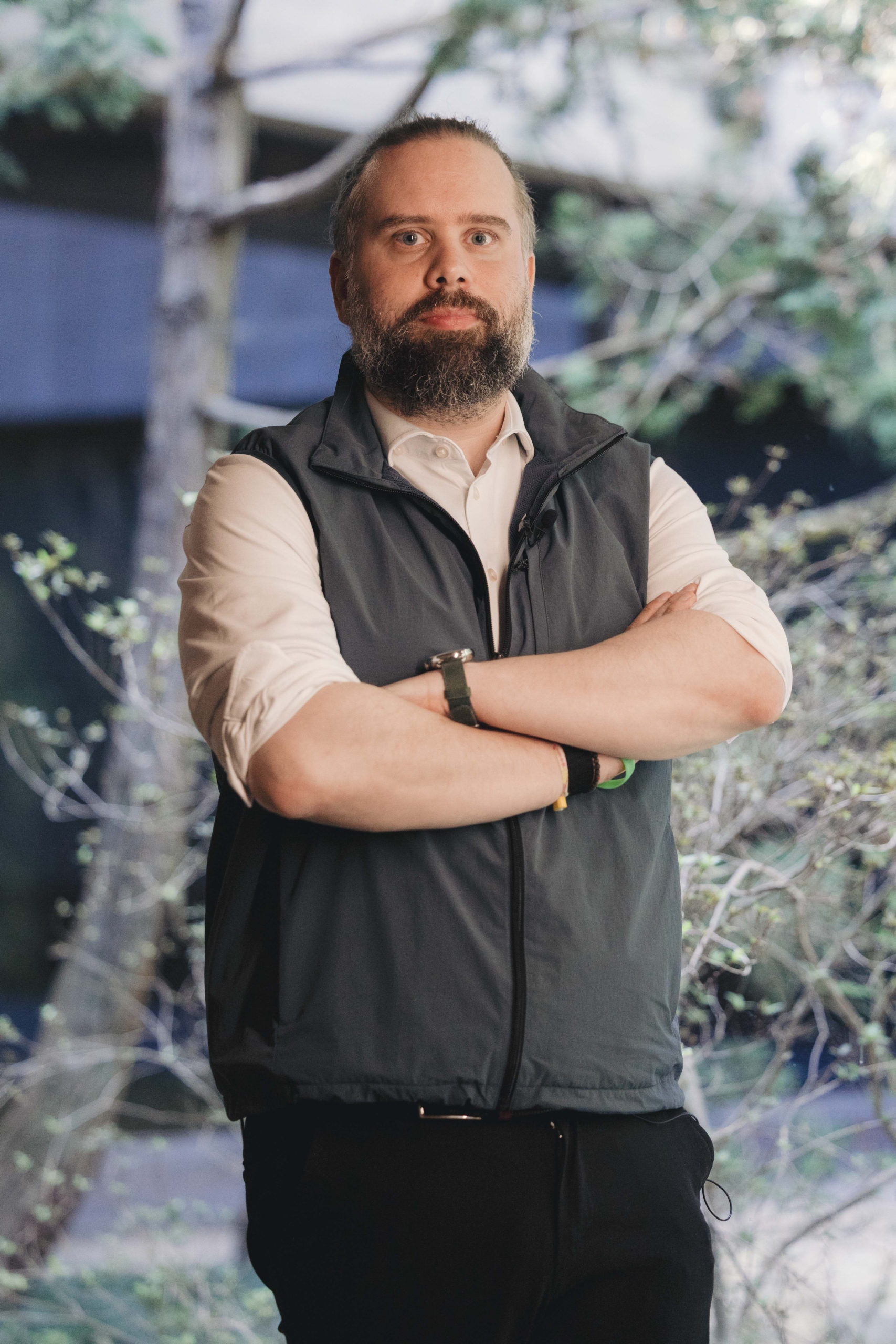
Sven Gerst is a philosopher and political economist whose work explores the future of liberal democracy, technology, geopolitics, and social change.
In early 2026, Sven developed a paper exploring the complexities of trust, which laid the conceptual foundations for the NECE Festival 2026. You can read an abridged version of the paper here.
Now, after the festival, Sven reflects on the conversations it sparked, the questions that remain unanswered, and what they reveal about the challenges of rebuilding trust in our societies.
There are few things more rewarding than seeing an idea come to life. When I wrote the concept paper for the NECE Festival 2026, I did so in proper philosophical fashion, i.e., in relative isolation: reading the empirical literature, analyzing country-specific survey data, and working through the relevant political theory – and, of course, trying to understand what civic education could contribute to rebuilding social trust. Watching the conversations I had with myself (as weird as that sounds, that’s how it works) and with the people at NECE turn into real-life exchanges, from small talk and chit-chat to panel discussions and the themes of an entire festival, has been an amazing experience. Yet (and this I found somewhat comforting) even this brain trust of people whose everyday work revolves around trust-building reminded me of our limits in understanding how to restore it once it is lost.
In fact, this was one of the most striking things I learned while writing the concept paper: we know considerably more about how trust erodes than about how it can actually be restored. That’s why I turned to civic educators for help. After all, they are in the business of helping people work through “trust issues.” Of course, we are not therapists. But building bridges and repairing relationships is part of our ethos and our raison d’être.
Yet, as many conversations at the festival brought home to me, our practical knowledge of this work comes from the micro level: from small groups or even encounters between two people. The hope that these interventions have consequences beyond those settings rests on trust – or, more precisely, a leap of faith. We ourselves don’t know exactly how to translate the micro into the macro. All we do know is that we don’t trust (no pun intended!) those making decisions at the macro level to get it right.
It was therefore a useful exercise to invite civic educators to consider the “bigger picture” and ask what lessons from their work on the ground might apply to broader social processes. Although this might sound incredibly self-serving, I think we are only beginning to work through these questions. In that sense, kudos to NECE for initiating the conversation. I will therefore devote the rest of this article to three observations that might help take the discussion further.
Let’s start at the highest level of abstraction. How much trust do we actually need?
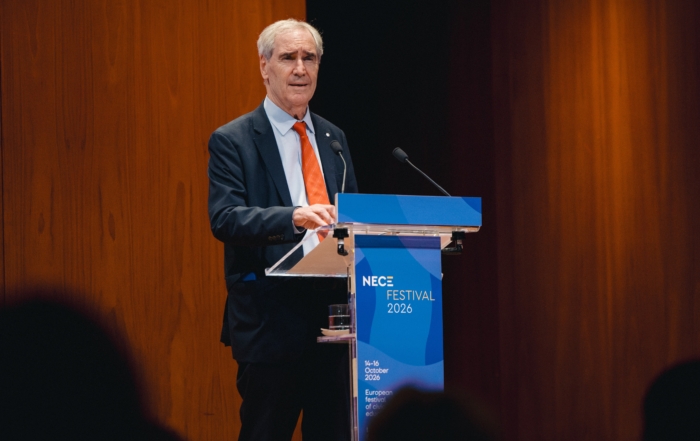
Honestly, given the philosophical nature of this question, I was surprised how often it came up in panel discussions, in Michael Ignatieff’s keynote, and in conversations during the sessions. There is still considerable pushback against treating trust as the overriding social goal. Sure, nobody disputed that social trust is the invisible infrastructure of liberal democracy. Yet the discussions in Lisbon also made clear that liberal democracy cannot abandon its Enlightenment commitment to its epistemology of methodological skepticism. We educate citizens to scrutinize power, question public authorities, and withdraw confidence when promises are broken. Trust has to be earned. In more contemporary terms, we are not in the business of “trust-maxing.”
Of course, this made for good talking points on stage. But it left a harder question: At what point does skepticism become toxic and undermine our ability to work through things together? The political economist would say that we needed a theory of a social optimum.
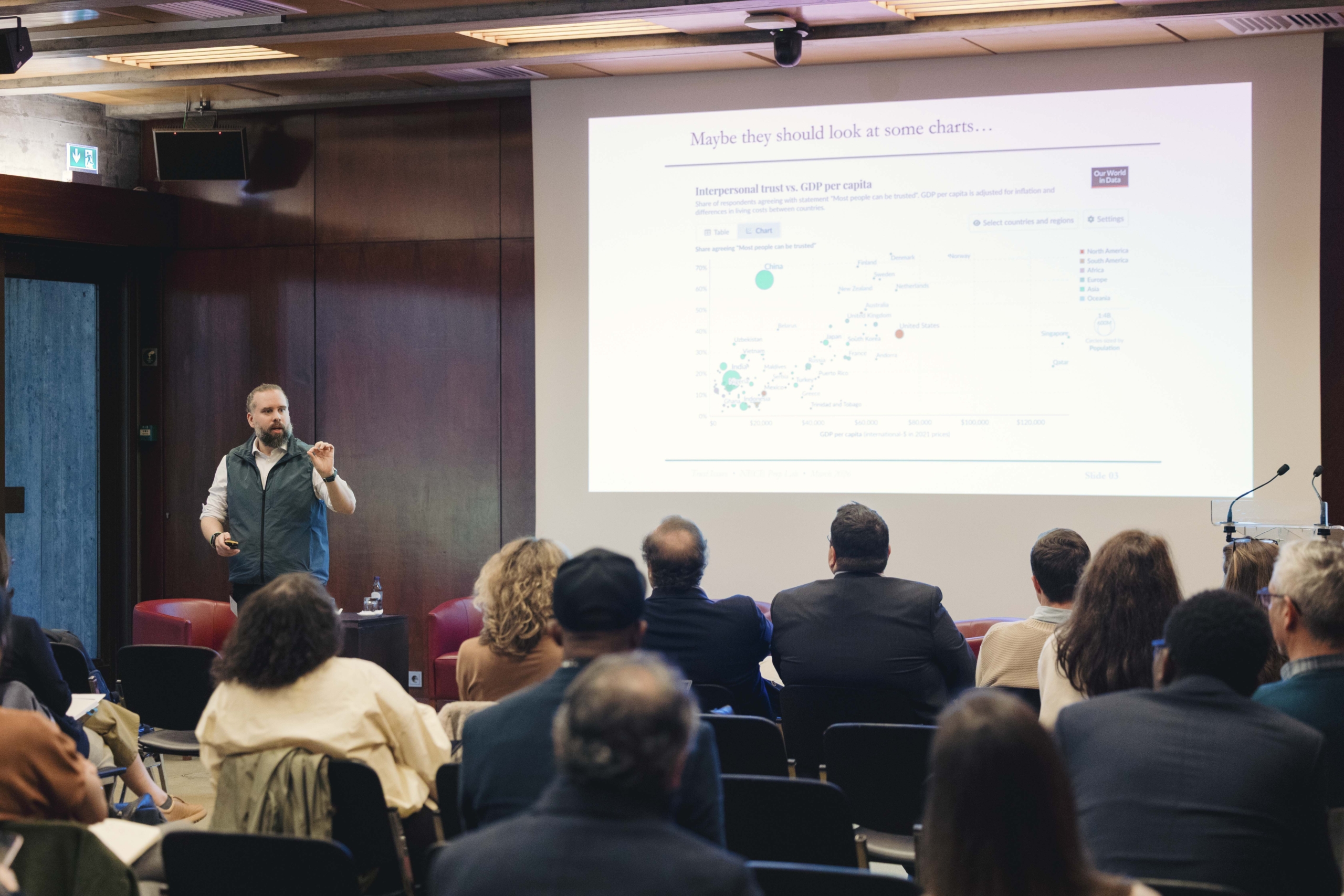
The practitioners I spoke to (luckily!) approached this less technically. They often had an intuitive sense and implicit knowledge that trouble was brewing; the data merely confirmed what they had already experienced. This suggests that civic educators can also serve as an early warning system for society. Data alone cannot tell us when skepticism becomes toxic. We need practitioners who can tell us that something is bubbling below the surface before the damage is done. This means that decision-makers should listen more closely to those who encounter the erosion of social trust in everyday practice.

My second observation is a bit more practical: in order to restore social trust, we might need to rely more on individual trust brokers than on institutions.
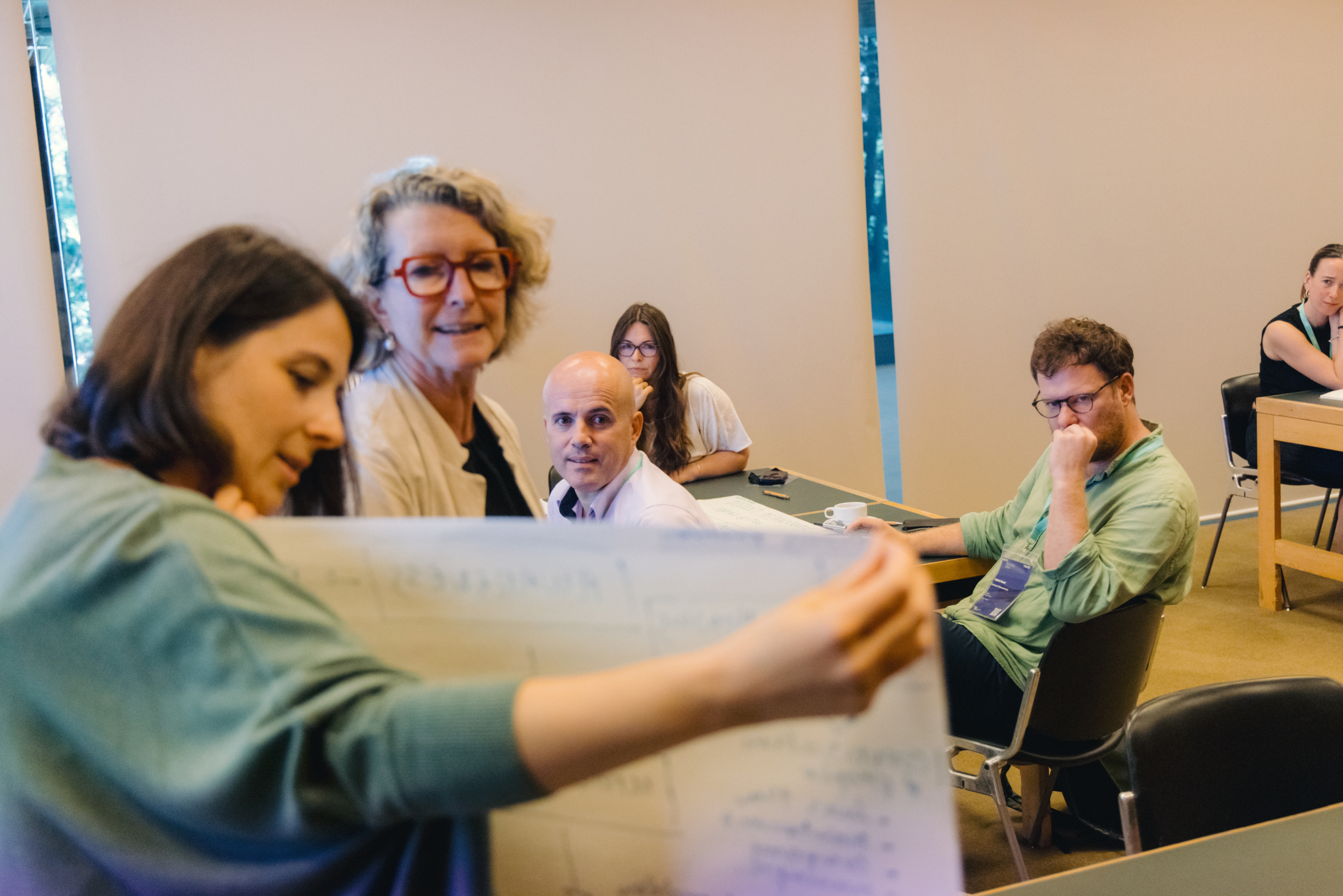
This thought was sort of born during the session on trust brokering with the wonderful people behind the Edelman Trust Barometer. For me, one of the major takeaways from their framework was that a shared investment in a project (i.e., common stakes) gives people a credible basis for bridging their differences. Trust brokers can help people across economic, cultural, and political divides identify these stakes and find something worth working on together.
When we worked through the exercise in smaller groups, I realized that the trusted brands of the past (including our own institutions) could be more of a handicap than an asset. We seemed to turn more often to independent intermediaries who had built their own standing in the community, outside the confines of an organization. As clichéd as it sounds, these might just be the repercussions of the influencer age.
This made me think differently about the role of social media personalities. We spend considerable time discussing the damage associated with social media, especially on panels. Yet influencers, independent communicators, and ordinary people also build relationships with audiences who come to trust them as individuals. There is plenty of potential here that we have yet to tap into.
Of course, having followers does not automatically qualify someone to be a trust broker. There is way too much shallowness in this field. But the interesting question is nevertheless whether that personal credibility can open up conversations that our institutions struggle to initiate. Having so many foundations and organizations in the audience in Lisbon might have made that an interesting (and certainly provocative) discussion!
Because for some of us, this would mean leaving the comfort of our institutions and building a reputation in our own name. We cannot simply assume that people trust us because of where we work. Sometimes they need to get to know the person first. And while this puts a certain responsibility on us as individuals, I find it quite hopeful: we might be able to build relationships even where our institutional affiliations have become an obstacle.
Finally, a somewhat inconvenient observation: we need to examine our own political priors.
What struck me throughout the festival was how much we like avoiding talking about our very own politization—personally and as a field. And don’t get me wrong. I am deeply political myself, for good reasons. Civic education has a normative foundation: We defend rights, insist on accountability, and uphold democratic principles. It is these convictions that make us go to work.
Yet I sensed some reluctance to examine how those same convictions might contribute to the problem. My reading of the trust literature is that the politicization of everyday life (from which LLM we use to which car we drive) is a major factor in dividing society. Because polarization means that political affiliation becomes a shortcut for judging someone’s competence, character, or credibility. And we are hardly immune to this ourselves. We speak about bridging divides while often having fairly settled views about who is responsible for the mess we are in.
This uncomfortable truth is one we tend to avoid tackling. In his remarks, Prof. Ignatieff explicitly addressed the tension between building trust in a plural democratic society and remaining attached to our tribal instincts. He spoke about the ethnic and religious attachments that make it difficult to trust others. And while I think this is true, I would place greater emphasis on another form of tribalism that appears in the literature: our political identities.
Now, this poses a particular challenge for all of us. Politics is, by its nature, confrontational. It is, after all, about the distribution of power – not just technocratic governance. But as political affiliations become identities, the contest over ideas and policies becomes an existential struggle. How do we solve that? This might deserve more reflection…and perhaps a few more of the sessions, panels, and interactive formats that the NECE Festival so wonderfully provided.
That these questions felt so urgent throughout our days in Lisbon is a credit to the organizers and their thematic choices. They brought us together around something that matters…and for which there are no obvious, ready-made solutions.
So, if we left with more questions than answers, this is hardly a flaw. It might, indeed, be a testament to what the festival was all about: great civic education.
* NECE is financially supported by the German Federal Agency for Civic Education | bpb and led by THE CIVICS Innovation Hub.
** This event is co-funded by the European Union. Views and opinions expressed are however those of the author(s) only and do not necessarily reflect those of the European Union or the European Education and Culture Executive Agency. Neither the European Union nor the granting authority can be held responsible for them.
Latest news
NECE Lab Zagreb: Navigating polarisation around labour migration in CESEE
NECE Lab Zagreb: Navigating polarisation around labour migration in CESEE October 27, 2026 By Maja Kurilic From 29 September ...
Trust and civic education
Trust and civic education NECE Festival: TRUST | October 15, 2026 Keynote speech by Michael Ignatieff “Citizens ...

NECE – Building on four years of pan-European collaboration
NECE – Building on four years of pan-European collaboration A new phase for Networking European Civic Education With the ...
Rethinking civic education through transformative experiences
Rethinking civic education through transformative experiences Insights from the NECE Lab in Lisbon July 1, 2026 By ...