

What dialogue taught me about trust
Reflections from NECE Festival 2026
November 9, 2026
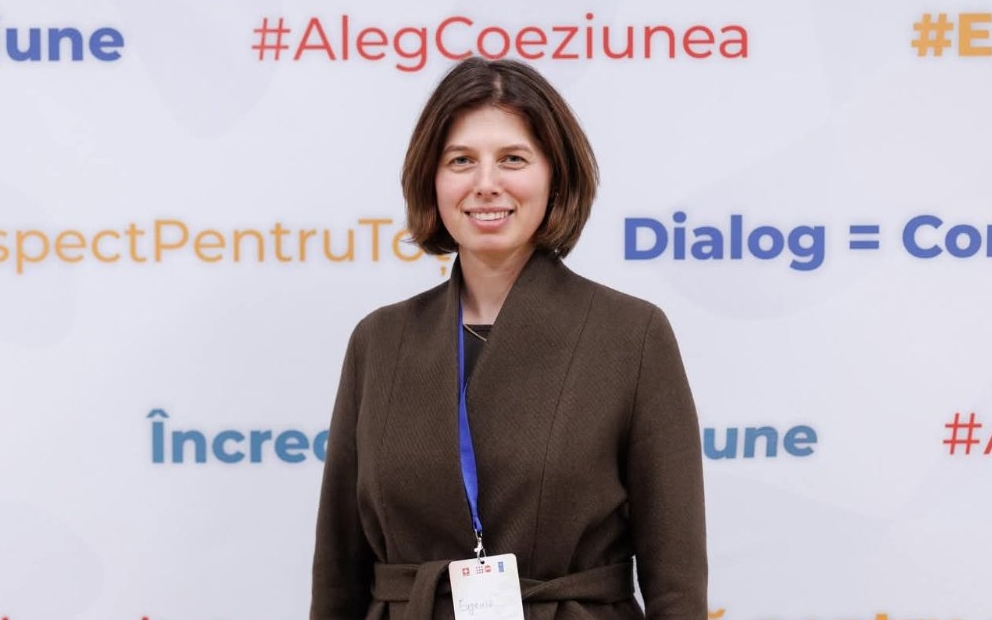
By Eugenia Iurco, Programme Analyst on Social Cohesion, UNFPA, United Nations Population Fund
At UNFPA Moldova, we work to strengthen social cohesion in a polarized context by building trust across generations, languages and ethnicities. An equally difficult task is to contribute to the ways citizens and authorities find channels to communicate with each other.
We do this through a formula that is both simple and complex: bringing ten young people and ten older people together in dialogue. Research in selected communities has shown how stereotypes shape the way each generation sees the other. These stereotypes become barriers to community initiatives and to bringing local needs onto the public agenda. People become hesitant to ask for help, anxious about communicating and less able to see the person behind their assumptions.
Attending NECE Festival 2026: TRUST in Lisbon gave me a fresh perspective on how we can repair this social fabric. I left with hope in the solutions that emerge when civic educators, NGOs and researchers come together to share their experiences.
The opening keynote by Prof. Michael Ignatieff was particularly important. We do not necessarily need to arrive at one unified version of reality. We need to be able to remain connected even when we hold profoundly opposing views. This speaks directly to our social cohesion work in Moldova, where we pay attention to power dynamics, who makes decisions, centre–periphery relations and the narratives that shape how people see their place in society.
Our intergenerational dialogues give people an opportunity to explore these differences. We have designed them as nine-month community clubs, from September to May, aligned with the school year. The intention is to build relationships through regular encounters, with summer offering an opportunity to celebrate the community, put what has been learned into practice and develop leadership among both young people and older people.
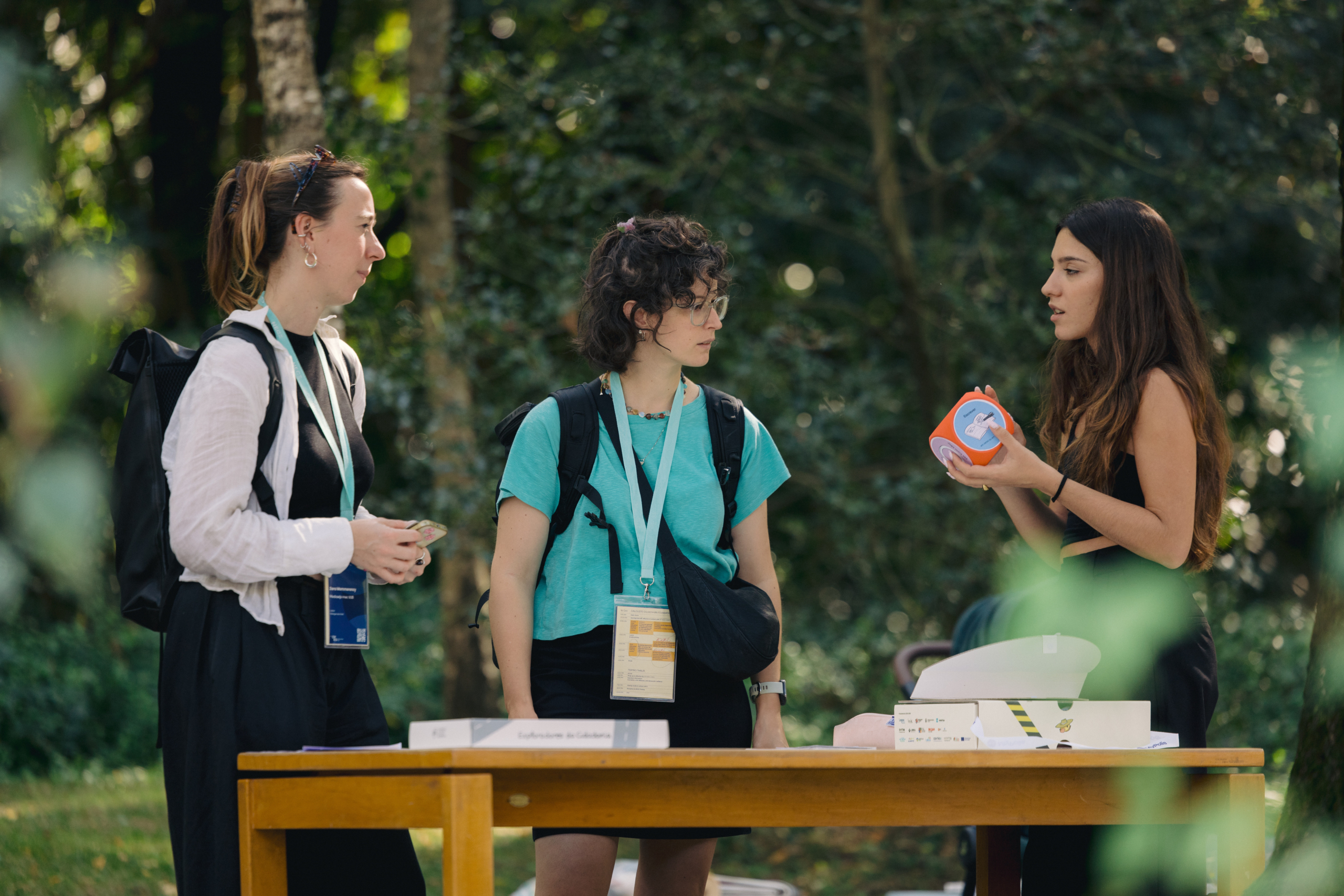
The NECE Festival’s Ubuntu session, “Building TRUST through relationships: The Ubuntu methodology”, facilitated by Maria Guerra and Sara Martins Silva, brought another important perspective. The principle of “I am because we are” reminds us that our lives are connected and that our well-being depends, in part, on how we relate to others.
I was particularly interested in the emphasis on care, empathy and service. The Ubuntu Leadership Bridge connects “I am” and “you are” through servant leadership, with the ethics of care as its foundation. Participants were invited to look at an existing civic activity and consider how it could be redesigned around interdependence.
For me, this is where the principle becomes tangible. It is not only about understanding one another, but also about doing something together. Through shared activities and service to the community, empathy becomes something we practise, and trust and care have a chance to grow.
Understanding the person behind the opinion
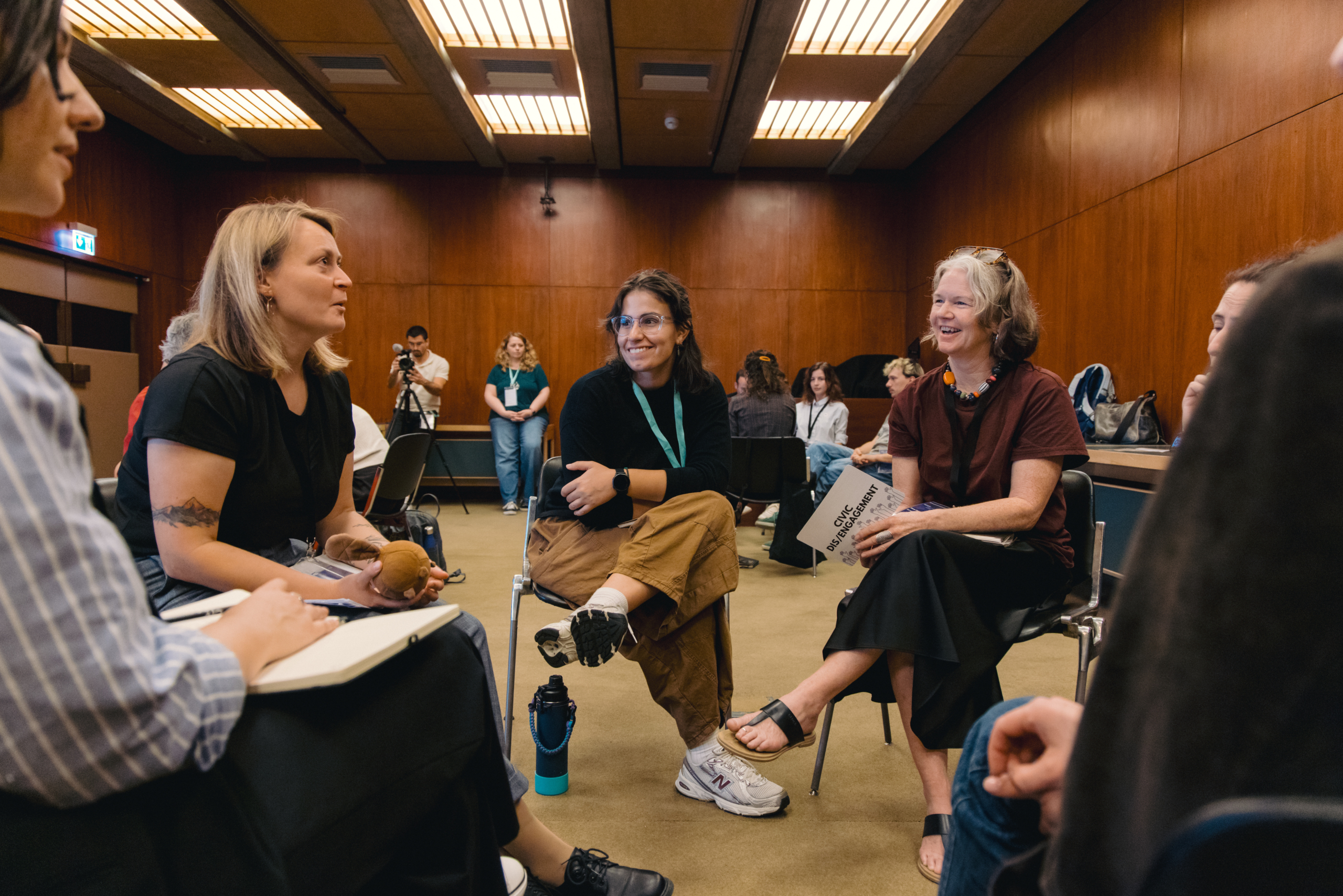
The session facilitated by Dr. Maja Nenadović, “From polarisation to participation: Dialogue as a tool for social cohesion and democratic sensemaking”, was particularly helpful in demystifying dialogue.
The methodology moved from understanding polarization in the wider context, including the role of media and disinformation, to a personal question: *What individuals or groups do you find difficult to talk with, because your views greatly differ from theirs?* It then invited us to consider what we could personally do to encourage constructive dialogue.
I appreciated this progression from the wider context to our own relationships and responsibilities. The session also reminded us how important ground rules are: listen without interrupting, respect others, share your own experience, remain present, respect confidentiality and be open to change.
We practised dialogue in a group with participants from Italy, Greece and Switzerland. One example from a small Italian community stayed with me. The arrival of a significant number of migrants had raised anxiety among local residents, including fears about losing their identity. In a small community, the change had a profound effect on the local landscape and created tensions between people who seemed to stand on opposite sides.
Yet the situation was not so simple. Migrants had come to contribute to the local economy, while residents had their own fears and concerns. The challenge was to create a space where both realities could be heard.
I immediately thought about our dialogues in Moldova. We encounter people who feel nostalgic about the Soviet period and others who aspire to reunification with Romania. These views can seem irreconcilable, and they do not necessarily follow generational lines.
But what if we did not have to decide who is right before we could listen to each other? What if we tried to understand the person behind the belief?
Nostalgia for the Soviet past may be connected to personal memories, while the aspiration for reunification with Romania may express a vision of the future. Both positions can also be connected to culture, traditions and belonging. Understanding where a belief comes from does not mean agreeing with it. It means making room for the person who holds it.
The importance of silence
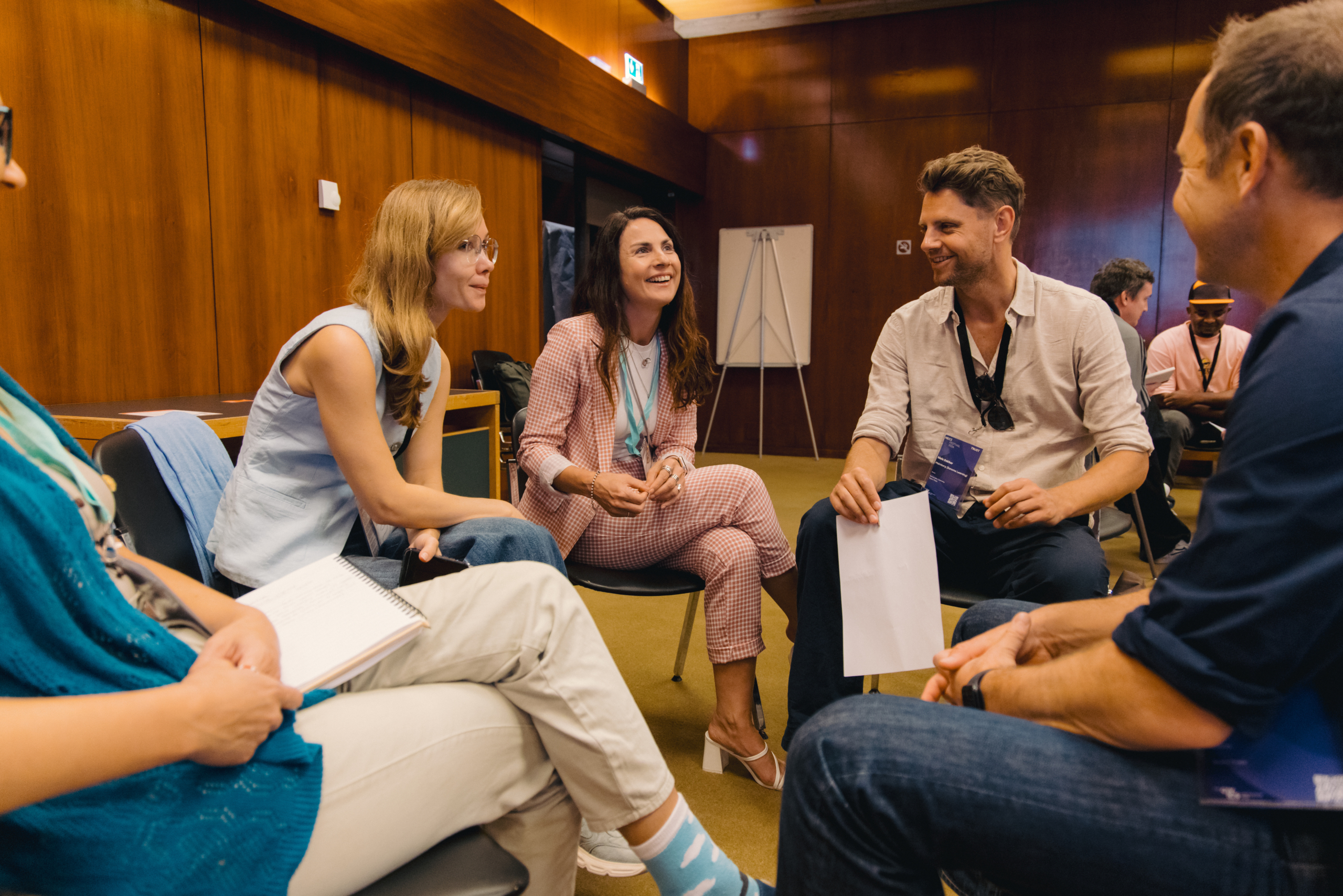
Another session that stayed with me was “Building relational trust through deep listening – Experiencing the Circle of Trust® methodology”, developed by the Center for Courage & Renewal® and facilitated by Maria Carbunaru.
I was particularly grateful for the reflection on silence. In our context, silence can feel awkward, and we often rush to fill it. Participants may start speaking, or facilitators may feel the need to intervene.
But what happens if we allow silence to have its own place in the circle?
Simply naming silence as something that belongs there can take away some of the tension and give people time to find their words. Silence does not necessarily mean that nothing is happening. Sometimes it is precisely when we stop speaking that reflection begins.
Several of the Circle of Trust touchstones stayed with me: respecting confidentiality, honouring the wisdom of others as well as our own, and giving and receiving welcome. I was also struck by the invitation not to fix, save, advise or correct one another.
This is something I want to reflect on further. We often feel compelled to offer solutions, even when what another person needs is simply to be heard. The same can happen in facilitation, when we feel responsible for resolving every uncomfortable moment.
Instead, we can ask open questions because we are genuinely curious about the answer. And when a conversation becomes difficult, we can turn to wonder: What does my reaction teach me about myself?
I was reminded of how important it is to create welcoming spaces, where people feel safe enough to share and learn. As Carmen García de Andrés put it, the architecture of trust is the invisible infrastructure upon which all learning rests.
Listening without needing to agree
The “Good conversation workshop”, hosted by New Community Foundation, offered another opportunity to experience this in practice. We discussed assisted suicide, a controversial subject, in groups of three, with participants holding different positions: against, in favour or uncertain.
What I found powerful was the way the conversation made room for personal stories and doubt. Rather than trying to convince one another, participants were encouraged to explain more and listen to the experience behind an opinion.
This made it possible to hear different perspectives without having to adopt them. Sometimes a personal story cannot change our own position, but it can help us understand why another person holds theirs. We may still disagree, but we no longer see only an opposing opinion; we begin to see the person.
The festival reminded me that dialogue does not require us to embrace another person’s perspective. It asks us to listen with enough openness to understand where that perspective comes from.
I returned to our work in Moldova thinking about how much this matters for the intergenerational community clubs we are building. Trust will not grow simply because we bring people into the same room. It takes time, regular encounters and the willingness to listen beyond stereotypes.
The festival gave me hope that human relationships can be repaired when we are intentional about listening and working towards the common good.
Trust is both a gift and something that must be earned. We can offer it by listening, welcoming and respecting one another, but we also have a responsibility to cultivate it through our actions.
As citizens, civic educators and representatives of organizations, we are all part of this process.
Perhaps we do not need to agree on everything to remain connected. Perhaps we need to learn how to make room for one another, even when our views differ, and discover what we can still do together.
*The NECE Festival: HOPE was organised by THE CIVICS Innovation Hub in partnership with the the European Wergeland Centre (EWC).
** NECE is financially supported by the German Federal Agency for Civic Education | bpb and led by THE CIVICS Innovation Hub.
Latest news
Trust Issues
Trust Issues November 5, 2026 By Sven Gerst Sven Gerst is a philosopher and political economist whose ...
NECE Lab Zagreb: Navigating polarisation around labour migration in CESEE
NECE Lab Zagreb: Navigating polarisation around labour migration in CESEE October 27, 2026 By Maja Kurilic From 29 September ...
Trust and civic education
Trust and civic education NECE Festival: TRUST | October 15, 2026 Keynote speech by Michael Ignatieff “Citizens ...

NECE – Building on four years of pan-European collaboration
NECE – Building on four years of pan-European collaboration A new phase for Networking European Civic Education With the ...