

European voices: Survey on future trends
in civic education
To explore where we are headed in civic education in Europe, we conducted a survey among CIVICS partners in 25 European countries. Here is what that looks like:
The civic educator of the future
Civic educators are more often than not versatile, multidimensional individuals that need to fill many shoes to fulfil their mission. But still, most of them have a ‘primary role’ – a calling, a profession, or a way they define themselves, and we wanted to know which ‘primary role’ they see as the one having the most impact in the times ahead. Asked about who they see as the civic educator of the future, 19% of respondents pointed to youth leaders as their top choice, followed closely by social influencers with 16,5% and community leaders with 15,2%. This suggests that there is recognition of the changing landscape of CE, where the traditional roles of civic educators may be shifting towards those who hold influence and authority among the younger generation. However, traditional roles are still within the respondents’ vision for the future, as NGO activists gathered 12,7% of the votes, followed by public intellectuals with 8,9% and journalists with 7,6%. An interesting find is that teachers only received 1,4% of the total votes and religious and business leaders got a staggering 0%, which implies that the civic educator of the future will likely not emerge from traditional institutional roles. This indicates a shift away from traditional influences and underscores that the business sector is not recognised as fulfilling its civic responsibilities.

The most important topics
As civic educators, we want to stay as relevant as possible to the constantly shifting issues and concerns that society faces and provide guidance and information that responds to them. When asked about what topics or trends they believe will be the most important for civic education looking ahead to 2025-2027, the largest number of respondents, 32% in total, expressed it’s climate change, which reflects a growing awareness of the urgency of environmental issues and their multifaceted impacts on society. Three other topics also gathered a significant number of votes and these are artificial intelligence, polarisation and democratic decline, with 20% of votes each. This suggests a recognition of the complex challenges posed by technological advancements, division, and threats to democratic institutions, all of which require informed civic engagement and education. Disinformation is also perceived as a growing topic of importance, collecting a total of 16% of the votes, followed by social justice and equity with 10%. Next in line of importance our civic education actors ranked civic engagement and activism and war and peace, each with 8% of the votes and immigration policy and border issues with 6%. Twenty-two percent of the respondents chose other topics, which suggests that the range of issues and trends in civic education is ever widening and cannot be simply fathomed to a single number.

The future needs
When considering the future of civic education, we must prioritise the needs of its key players—the educators themselves. Without making efforts to support them in meeting their own needs, we cannot expect them to effectively address the multitude of challenges ahead.
Respondents emphasised several key areas crucial for effective civic education. Funding and resources emerged as the most pressing need, with 29%, underlining the importance of adequate financial support for implementing educational initiatives. Innovative teaching methods followed closely behind with 25%, indicating a recognition of the need for dynamic approaches to engage learners effectively. This need has already been prominently emphasised in a 2023 CIVICS report. Additionally, networking and collaboration opportunities were highlighted by 20% of respondents, emphasising the value of partnerships in enhancing educational outcomes. Access to technology and skills received 17% of total votes, reflecting the importance of digital literacy in modern education and 6% of respondents noted the need for support in working with diverse learners. The challenges civic educators will face in the future are perceived to be of a varied nature and should be addressed through a holistic and collaborative approach.

The institutional input
As governments and the EU have a primal role in caring for the civic education ecosystem in Europe and promoting engaged citizenship beyond just financial contributions, we asked our respondents the open question “In addition to funding, how can governments or the EU actively contribute to strengthening the civic education ecosystem and fostering engaged citizenship?”. Each respondent elaborated on the topic and upon summarising the results we identified the most frequently suggested strategies or approaches through quantification of mentions of themes.
To strengthen civic education and foster engaged citizenship, institutions should prioritise integration into formal education systems by embedding civic education into national policies and school curricula and making it a priority. Our report on the demands of civic education in Europe demonstrates that half of Europe’s countries have not yet introduced civic education as a standalone subject. Additionally, there needs to be a digital and global emphasis, with initiatives aimed at promoting digital literacy, emphasising global citizenship, and launching public awareness campaigns to highlight the importance of civic engagement in a globalised world. Moreover, fostering youth and civic innovation through the development of platforms for youth engagement, the creation of civic innovation hubs, and nurture for youth clubs and infrastructure is crucial to democratic processes, so it needs to be supported at all levels, including at the governmental and EU-level. Cultural exchanges fostered by institutions can further enhance civic education by promoting European citizenship, acknowledging contributions to civic engagement, and providing positive examples for others to follow. Cross-sectoral collaboration, organisational and structural support, along with ensuring information access and synergies, are vital components in creating a supportive environment for civic education. Finally, regulation and governance play a key role in enforcing the presence of civic education in curricula and promoting a whole-school approach to democratic citizenship education.

The philanthropic input
Together with governmental and the EU’s aid, philanthropic support is also of big significance in making the civic education ecosystem thrive, so we collected our respondents’ insights on the topic by asking them what unconventional methods or resources they believe philanthropies can provide to support and elevate the civic education ecosystem beyond financial contributions. We used the same approach of quantification of mentions of themes and analysed the data to reveal distinct themes, each reflecting a nuanced approach to elevate civic education to new heights.
Support with capacity building and research emerged as a main point for philanthropic involvement, with a significant 20% of respondents advocating for the development and implementation of tailored educational or leadership initiatives for them, as well as research initiatives that identify effective teaching methods and tools, and assess the impact of certain civic education programs. Complementing this emphasis on education, expertise in new technologies gathered 14.3% of responses, signalling a need for civic educators to better master the transformative potential of digital tools in advancing civic literacy and engagement. Advocacy and networking also collected 14.3% of votes, advocating that philanthropists use their networks to communicate that civic education and the development of democracy is a collective issue requiring collective efforts. Furthermore, the survey revealed the importance of access to media, with 11.4% of respondents pointing out they need media collaboration to reach a wider audience. Additionally, enabling access to spaces for real-life engagement where democratic processes can take place and personal contributions such as the provision of personal knowledge and efforts by the philanthropists, also received 11.4% of votes each. Lastly, organisational development and support and access to decision-makers emerged as complementary strategies receiving 8,6% of votes each.

The skills of the future
When asked about what skills and competencies civic education should prioritise to empower future generations to be effective civic participants, respondents chose critical thinking and analysis, essential for navigating the abundance of information. Alongside this, empathy emerged as a foundational skill, enabling individuals to relate to diverse perspectives. Effective communication and engagement together with resilience in defending democratic models were also placed high on the list. Furthermore, listening skills, responsible usage of technology and self-responsibility also were chosen as the skills that will be necessary for anyone who wants to contribute to society’s progress and well-being.

The personal examples
The best way to predict what the future will look like is to look at the past, so when thinking about the trends ahead, we asked our respondents to share a personal story or experience where they witnessed a civic education tool, method, or approach making a significant impact. The answers are reconfirming what most civic educators already know – a blend of traditional and innovative approach is needed when aiming to make an impact. Here are some of the stories our respondents shared:
Paving the way
To finish shaping the picture of the future of civic education, we asked our respondents how civic education can better prepare citizens to engage in meaningful dialogue and collaboration across political and cultural divides. The answers focused on real-life strategies that can be divided into two groups: education and action. When it comes to education, the respondents highlighted the need for emphasising the topics of diversity, media literacy and the importance of democracy, as well as poverty, debt and moral values. They also suggested various actions that can be taken, such as reaching out in town halls and other public spaces, providing trainings in communication, and having consistent interactions on the local level.

The whole picture
Clearly, the future of civic education demands a paradigm shift in roles and priorities. The European context shows that there is an obvious consensus on emerging trends and challenges – notably, youth leaders, social influencers, and community leaders are seen as pivotal figures. Climate change, artificial intelligence, and democratic decline are identified as critical trends demanding attention and requiring adequate funding, innovative teaching methods, and collaborative partnerships. Governments and the EU must integrate civic education into formal systems, promote digital literacy, and foster youth innovation. Philanthropies are urged to support tailored education programmes, leverage technology, and amplify civic messages through media and outreach. Crucially, prioritising skills like critical thinking, empathy, and the responsible use of technology will empower future generations to engage meaningfully.
What’s next?
As we continuously strive to create an optimal enabling environment for NECE (Networking European Civic Education), our search for answers continues. Stay tuned for the release of our first issue of the NECE magazine, where we explore a diverse range of topics and perspectives delving into transformative methods such as applied strategic foresight in civic education, hope-based communications, deep reading, and the civic power of inner work, among others.
Latest news
Trust and civic education
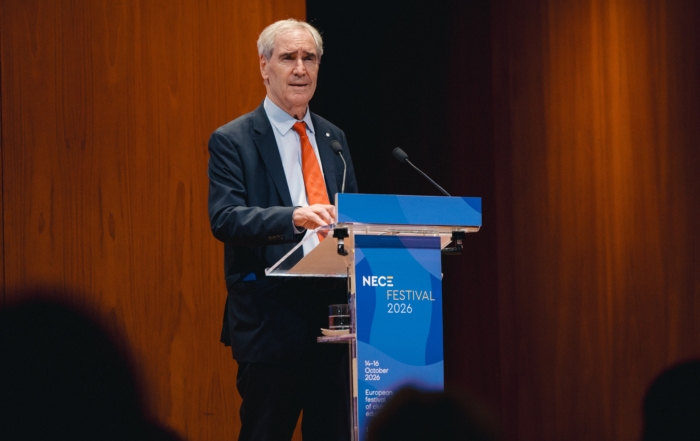
Trust and civic education NECE Festival: TRUST | October 15, 2026 Keynote speech by Michael Ignatieff “Citizens ...

NECE – Building on four years of pan-European collaboration
NECE – Building on four years of pan-European collaboration A new phase for Networking European Civic Education With the ...
Rethinking civic education through transformative experiences
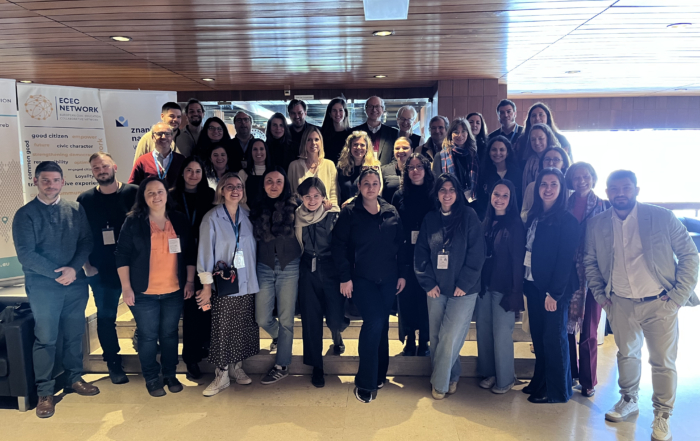
Rethinking civic education through transformative experiences Insights from the NECE Lab in Lisbon July 1, 2026 By ...

Europe cannot educate for democracy as if the world has stayed the same
Europe cannot educate for democracy as if the world has stayed the same Reflections from a NECE & ...