
Human library
The human library is a new format at the NECE Festival which brings together real people, as ‘human books’. They share personal stories with small groups of ‘readers’ in safe, open and deeper conversations. Within the action hub on day 3, four books will offer a different window into what TRUST means in their personal context, making it not just a theme to discuss, but something to genuinely experience. Each book will share their story twice: in the morning and afternoon of Day 3 of the festival.
Where: Calouste Gulbenkian Foundation, Room 4, 16 October
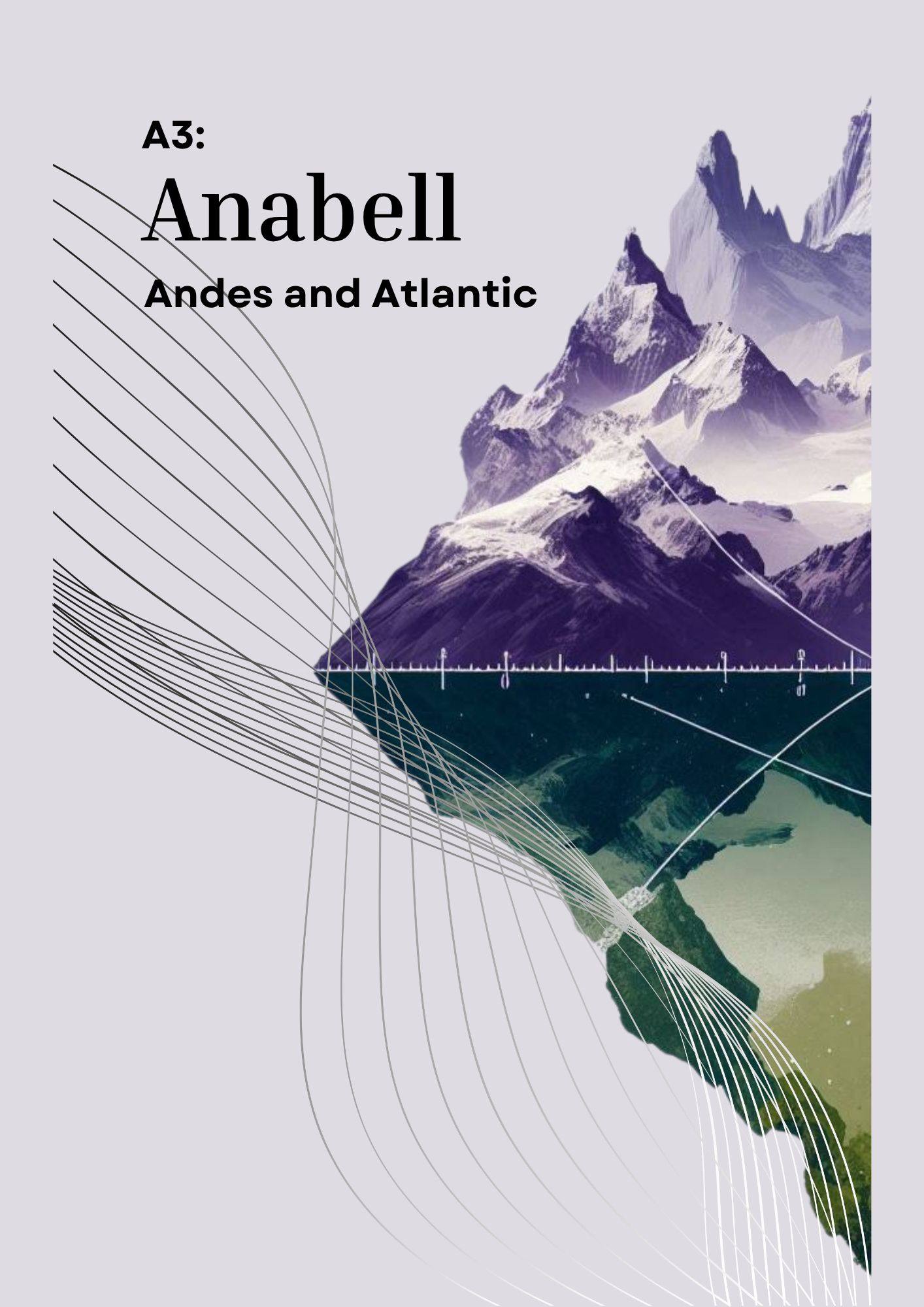
A3: Anabell, Andes and Atlantic
10:30 – 11:30 am & 2:00 – 3:00 pm
A3 is the story of a woman, a mountain range and an ocean.
Anabell grew up in Venezuela, in a small and tightly bound family, in a country that would go on to lose a quarter of its population in less than a decade: one of the most dramatic exoduses of recent years. Her family became part of that number, but not together: within a few years they were living in four different countries.
She left first for Chile, where the Andes stood in front of her window every day for almost five years, and later crossed the Atlantic to Portugal. On paper, both moves were the “good” kind of migration: prepared, qualified, documented. The book is about everything that description leaves out: what happens to a confident young professional when every new border asks her to prove, again and again, who she is.
It is also a book about a family holding on across distance. About news that arrives from too far away to act on. About the difference between a loss you can see coming and one that simply detonates. And about what she decided to do afterwards, in a country where she knew almost no one and did not yet speak the language.
Anabell wrote A3 in The Power of My Story, a European programme she took part in through the Portuguese association PAR – Respostas Sociais, built around the idea of the human library: stories told in person, by the person who lived them. The title stands for Anabell, Andes and Atlantic — the places she crossed to arrive — and for the two women to whom the book is dedicated. She reads it out loud rarely, and never quite the same way twice.
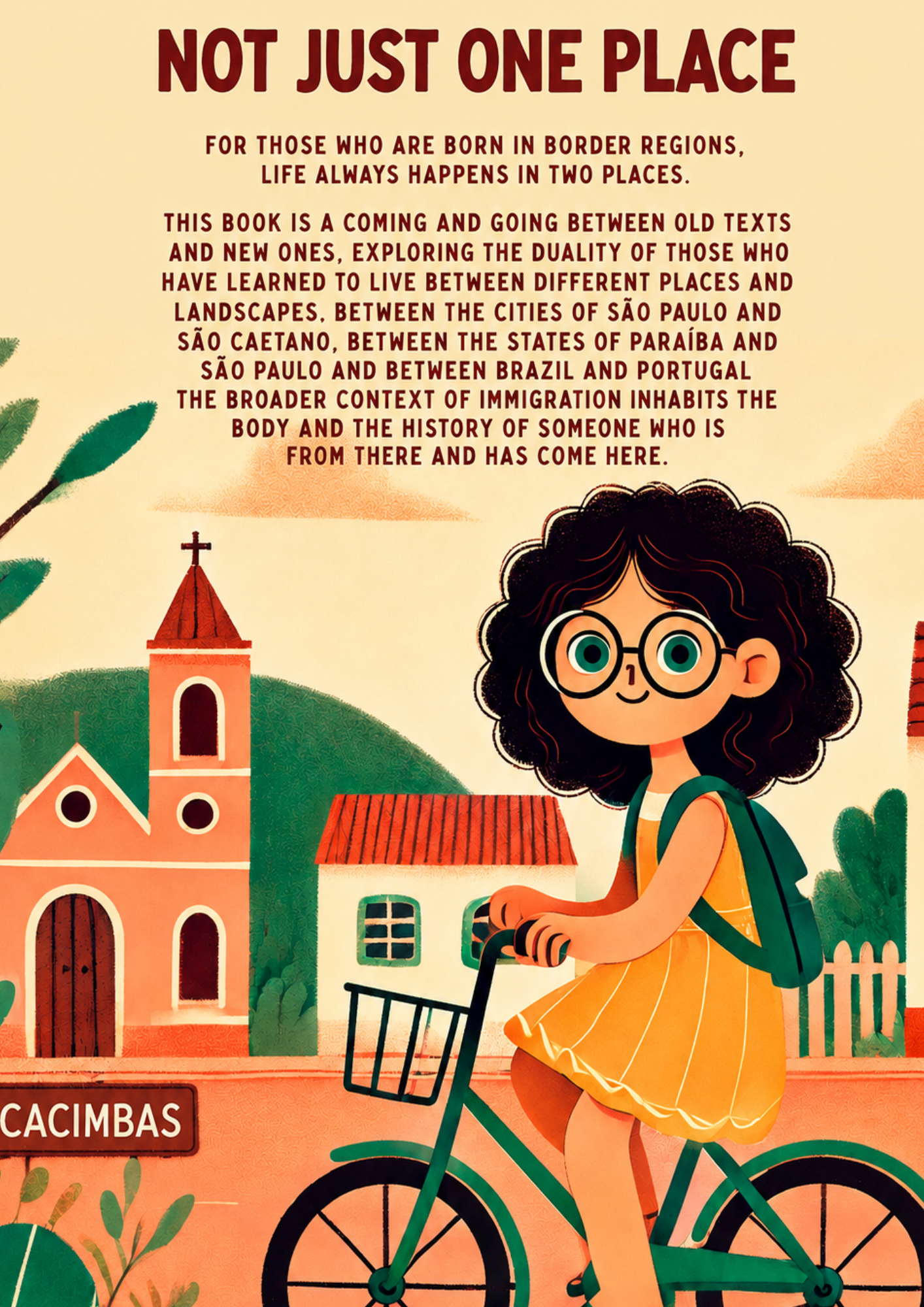
Not Just One Place
10:30 – 11:30 am & 2:00 – 3:00 pm
A person’s story is made up of the collages of memories from countless moments. This book is composed of collages of new and old letters where past and present become intertwined within the same fabric of memory, tracing the journey of a Brazilian immigrant in Portugal, from the story of her family, who were themselves migrants, to her first impressions of a new country.Through a fragmented and intimate narrative, the book explores the complex ways in which belonging is constructed, questioned and reconstructed throughout a lifetime. It begins in childhood, during summer vacations at her parents homeland, where the author experiences, from an early age, the feeling of belonging to more than one place while never fully belonging to any of them. Family memories, letters, journeys and childhood experiences become the starting point for a reflection on migration, identity and the meaning of home.
The narrative then explores experiences of art as a profession and a way of understanding the world. Theatre, education and the relationships built with teachers and colleagues shape the understanding of empathy, critical thinking and the possibility of social transformation. Alongside these experiences emerges a recurring question: who are we when what we do no longer defines us? The move to Portugal began a new chapter marked by discovery, displacement and uncertainty. Migration forces the confrontation among aspects of identity that had previously remained invisible, including the understanding of being Brazilian and the relationship with racial privilege. The experience of studying, working, moving between homes and surviving periods of financial instability reveals the less visible dimensions of migrant life: loneliness, precariousness, adaptation, the constant negotiation between the person one was and the person one is becoming and the living experience of the portuguese concept of Saudade, one that only exists in this language. Between letters, memories and reflections, this book is ultimately an exploration of what it means to leave, to arrive, and to discover that home is not always a place one comes from, but sometimes something that is slowly built with the people, experiences and memories one carries along the way.
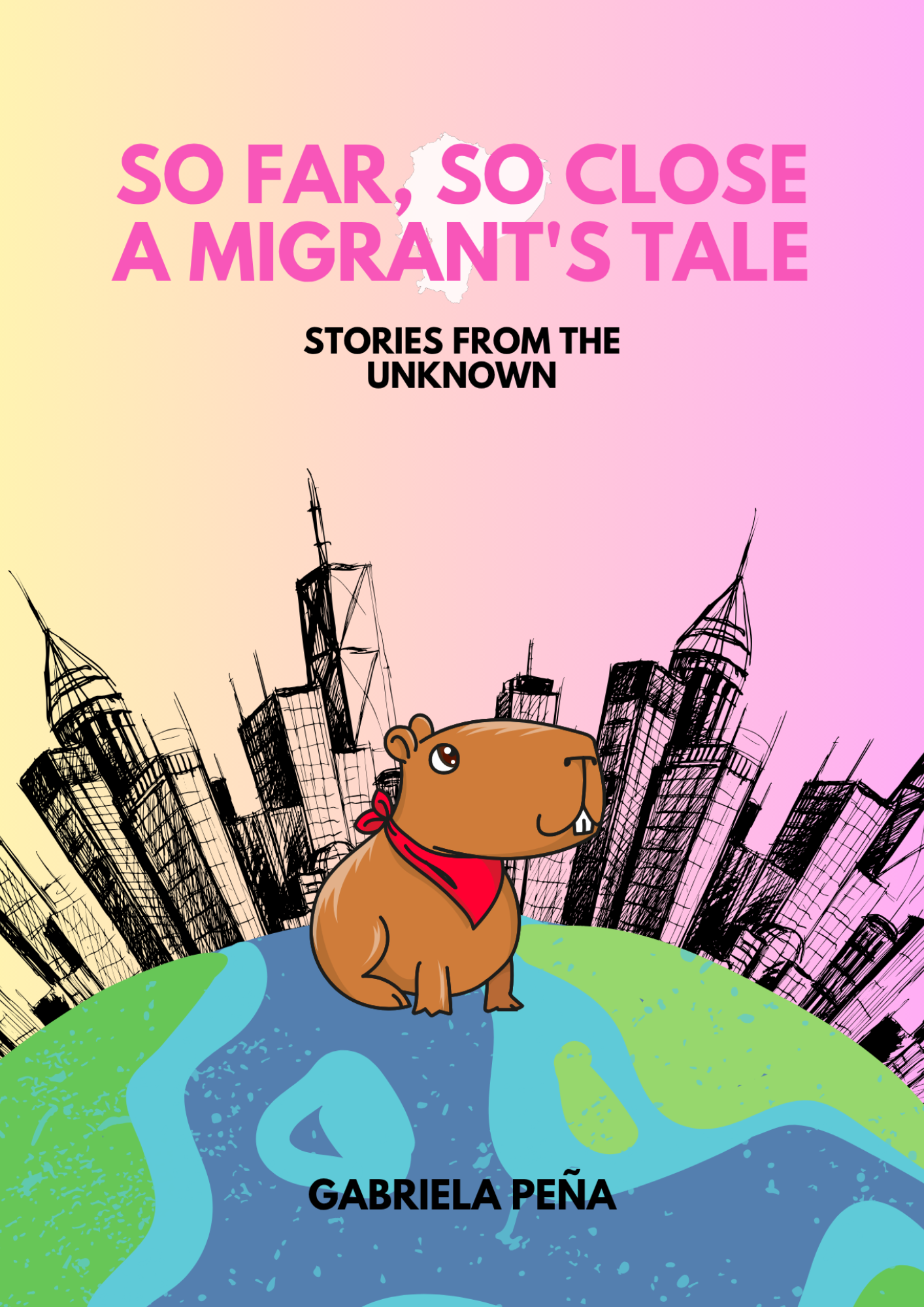
So Far, So Close. A Migrant’s Tale
11:30 am – 12:30 pm & 3:00 – 4:00 pm
Lots of stories make this one… From the vibrant streets of Portugal to unexpected adventures, these tales capture the beauty of discovering the good in the unfamiliar.
Moving to a new country is so much more than packing a suitcase and changing your address. It means having the courage to step out of your comfort zone and jump headfirst into the unknown. When you arrive in a new place, everything feels different: the language, the daily rhythm, and even the smallest habits. Navigating this new reality requires patience, curiosity, and a willingness to embrace the unexpected moments that shape our everyday life.
In this journey, I realised something important: we don’t just have one single identity for our entire lives. We are not rigid. As we move, learn, and adapt, we build new layers of who we are. Migration forces you to let go of the idea that you have to stay the same forever, giving you permission to construct new versions of yourself along the way. Each experience adds depth to how we perceive ourselves and the world around us.
But you don’t do this alone. Beyond official papers or formal steps, true integration happens in the small, everyday moments. The people you meet in your daily routine become a huge part of your story. A friendly smile at a local café, a helpful neighbour, or a warm conversation with a stranger. These simple human connections are what make a foreign place start feeling like home. They remind us that trust is built piece by piece, right in the middle of our daily lives.
Ultimately, this story is a reminder that sometimes, the best things happen when you step into the unknown. It is an exploration of rebuilding life from scratch, embracing every identity we carry, and discovering how ordinary human warmth can make what once felt so far away suddenly feel so close.
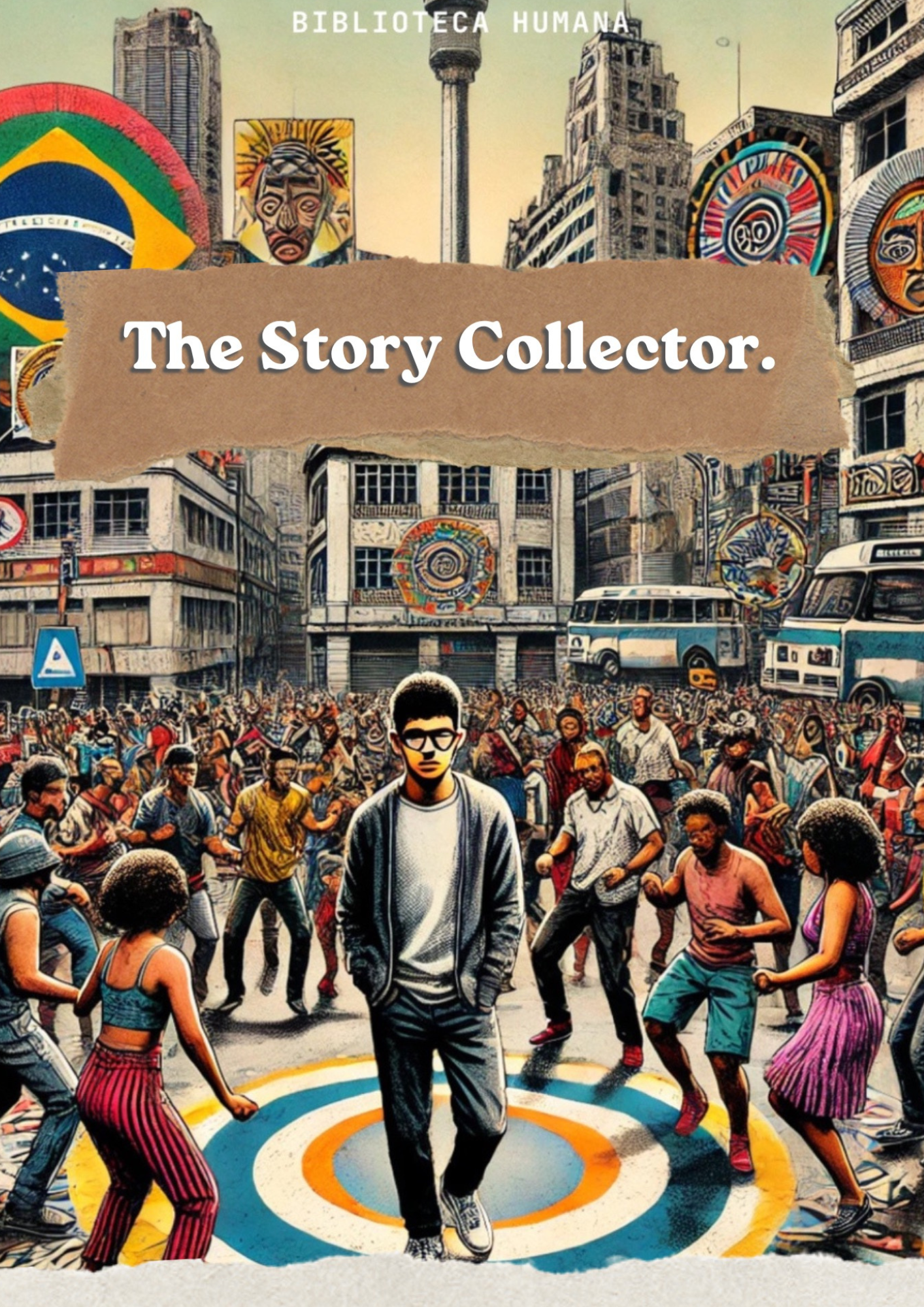
The Story Collector
11:30 am – 12:30 pm & 3:00 – 4:00 pm
Marcelo Gaspar, 34, is the grandson of the Portuguese João Gaspar, who emigrated to Brazil in 1956, fleeing the Salazar regime. His parents had him young, at 21 and 23 years old, as a gift for his maternal grandmother, who suffered from rheumatism and died three years after his birth. He grew up in the south of São Paulo, a place chosen as the most violent in the world by the UN in 1996. At 14, he started working with children at parties and camps, and at 21, he graduated in Advertising, but the reality of agencies — with exhausting hours and no rights — wore him down.
In 2016, after a breakup, a crisis at work, and a change of house, he had another bout of depression and decided to emigrate to Portugal. He arrived with only 500 euros and faced bureaucracy — which made him undocumented — rejection in the job market, and xenophobia. He worked in hostels, bars, and restaurants, often in precarious conditions and with abusive working hours. He lived in Porto, Amsterdam, Budapest, and Barcelona. And on one of these trips, he met his current partner, a Portuguese woman, with whom he has lived for seven years.
Marcelo faced serious episodes of discrimination: he was the target of bottles thrown by a neighbour, heard “go back to your country,” and suffered from employers who exploited him by disrespecting labour laws, working more than 270 hours a month without receiving overtime pay. However, he gradually stopped hating the Portuguese who committed these “crimes” and more the system that, in a way, allowed and encouraged these actions.
He organised himself and today is active in the Popular Unity for Socialism, working against labour exploitation, racism, fascism, and inequality. He participated in struggles against the eviction of São Toméan immigrants in Loures. He left his restaurant work and became a writer, writing opinion articles for Público and on his substack. He also published his first book inspired by Eduardo Galeano, where he places the stories he collected on the timeline of the times we live in, with its contradictions and mythologies.
Today, Marcelo uses his voice to expose ignored realities. He fears the violence against immigrants, which is growing in the country, and reinforces: immigrating is not a crime, it is a human right. His account is a portrait of the struggle of those seeking dignity in a foreign land, but not only for foreigners.